

COMMERCIAL FLOOR SAFETY
Kitchen & Commercial Floor Anti-Slip Treatment in Dubai
Improve traction on suitable kitchen and commercial floors with a treatment selected for the surface, working conditions and cleaning routine.
Slippery Solutions assesses existing flooring to help reduce slip risks in restaurants, hotels, commercial kitchens, food preparation areas and other busy facilities. Request a Site Assessment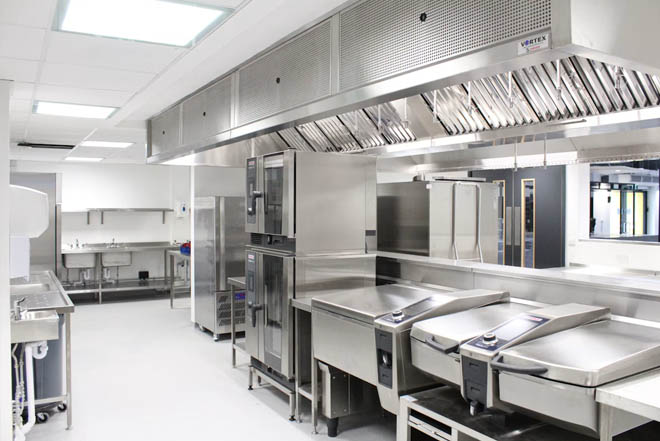
Commercial Kitchen Floors
Assess suitable floors exposed to routine washing, water splashes and food-preparation activity.Restaurant & Hotel Areas
Consider compatible flooring in back-of-house areas, service zones and selected hospitality spaces.Existing Flooring
Where the material is suitable, treatment may improve traction without automatically replacing the floor.Why Commercial Floors Can Become Slippery
Commercial environments experience changing floor conditions throughout the day. Even a floor that performs well when clean and dry may become slippery when contaminated or wet.- Water and wash-down: routine cleaning and splashes can leave moisture on the floor.
- Oil and grease: cooking and food-preparation activities can create difficult contamination.
- Food and detergent residue: spills and cleaning products may affect traction if not promptly removed.
- High foot traffic: repeated movement, carts and equipment can increase wear and contamination.
- Cleaning schedules: the selected treatment must be compatible with the facility’s cleaning methods and operating needs.
Areas We Can Assess
Restaurant Kitchens
Floor assessment for cooking, washing and food-preparation areas where spills and moisture are common.Hotel Back-of-House Areas
Suitable floors in service corridors, kitchen work zones and staff-only areas can be evaluated.Cafeterias & Food Courts
Review selected kitchen, serving and support areas according to the floor material and traffic.Commercial Facilities
Assessment for compatible tile, stone, concrete and other suitable surfaces in busy working environments.Suitable Flooring Materials
Potential surfaces for assessment include ceramic tile, porcelain, natural stone, marble, granite, terrazzo, concrete and other compatible flooring. Suitability depends on the specific material and finish. Polished surfaces, existing coatings, sealers and previous treatments may influence both performance and appearance. Before recommending a solution, Slippery Solutions considers the surface condition and how the area is used. Where compatibility is uncertain, a small test area should be evaluated before wider application. In commercial kitchens, any proposed treatment must also be appropriate for the cleaning regime and the site’s operational and hygiene requirements.Our Commercial Anti-Slip Treatment Procedure
Inspect the Floor and Work Area
Identify the flooring material, finish, wear, contamination patterns, traffic levels, drainage and areas where slipping is a concern.Confirm Treatment Compatibility
Review sealers, coatings, previous treatments and the facility’s cleaning methods. Test a small area if required to check suitability and appearance.Clean and Prepare the Surface
Remove grease, oil, food residue, detergent build-up and other contamination using a method suitable for the flooring and selected treatment.Apply the Appropriate Treatment
Application method, coverage, contact time and site conditions depend on the selected system. Follow the manufacturer’s technical instructions carefully.Finish and Inspect
Complete the required finishing or rinsing steps and inspect the surface. Keep the area out of service until the specified conditions for safe reopening are met.Maintain the Floor
Follow the recommended cleaning routine, remove spills promptly, maintain drainage and inspect high-use areas regularly.Benefits of Professional Commercial Anti-Slip Treatment
- Helps improve traction on compatible commercial flooring.
- Can help reduce slip risks under the conditions the selected treatment is designed for.
- May help preserve existing floors where replacement is not necessary and the surface is suitable.
- Allows the treatment approach to be matched to the floor material and working environment.
- Can be considered for restaurants, hotels, commercial kitchens, cafeterias and selected facilities.
- Supports a broader floor-safety plan alongside cleaning, spill response, drainage and inspection.